A Heat Pump Installation in Bristol, Day by Day
Last reviewed: 2 October 2026
Follow a typical five-day heat pump installation in a Bristol Victorian terrace, from the week before the installers arrive to the handover, with the Bristol-specific details that affect each stage.
Before the installers arrive
By installation week, three things have already happened: a room-by-room heat loss survey, a quote you’ve accepted, and a Boiler Upgrade Scheme voucher issued to your installer by Ofgem. If your home is listed or the unit faces the road in a conservation area, consent will have been granted too.
The week before, your installer should confirm:
- Parking. Much of inner Bristol has residents’ parking zones and narrow streets. Ask how the team will park a van and deliver a cylinder and outdoor unit, and whether a visitor permit or suspension is needed.
- Access. Steep steps, narrow side passages or a garden reached only through the house all affect how the outdoor unit gets into place.
- What to clear. Space around each radiator being changed, the cylinder cupboard and the route to the outdoor unit position.
Day 1: outdoor unit and base
The team protects floors, then builds the base for the outdoor unit: a concrete pad, paving slabs on a compacted bed, or a wall bracket. In Bristol’s sloping back gardens — Totterdown, Windmill Hill, Clifton Wood — this can take most of the day if a level base needs cutting into the bank.
The unit is positioned and fixed, and the route for the pipes into the house is planned and drilled. Holes through old Pennant stone or solid brick walls are cored carefully and sealed afterwards.
Day 2: cylinder and pipework
The old boiler is disconnected and removed. If you had a combi, this is the day the new hot water cylinder goes in, usually 180–210 litres for a three-bedroom terrace, in the old airing cupboard or a new cupboard.
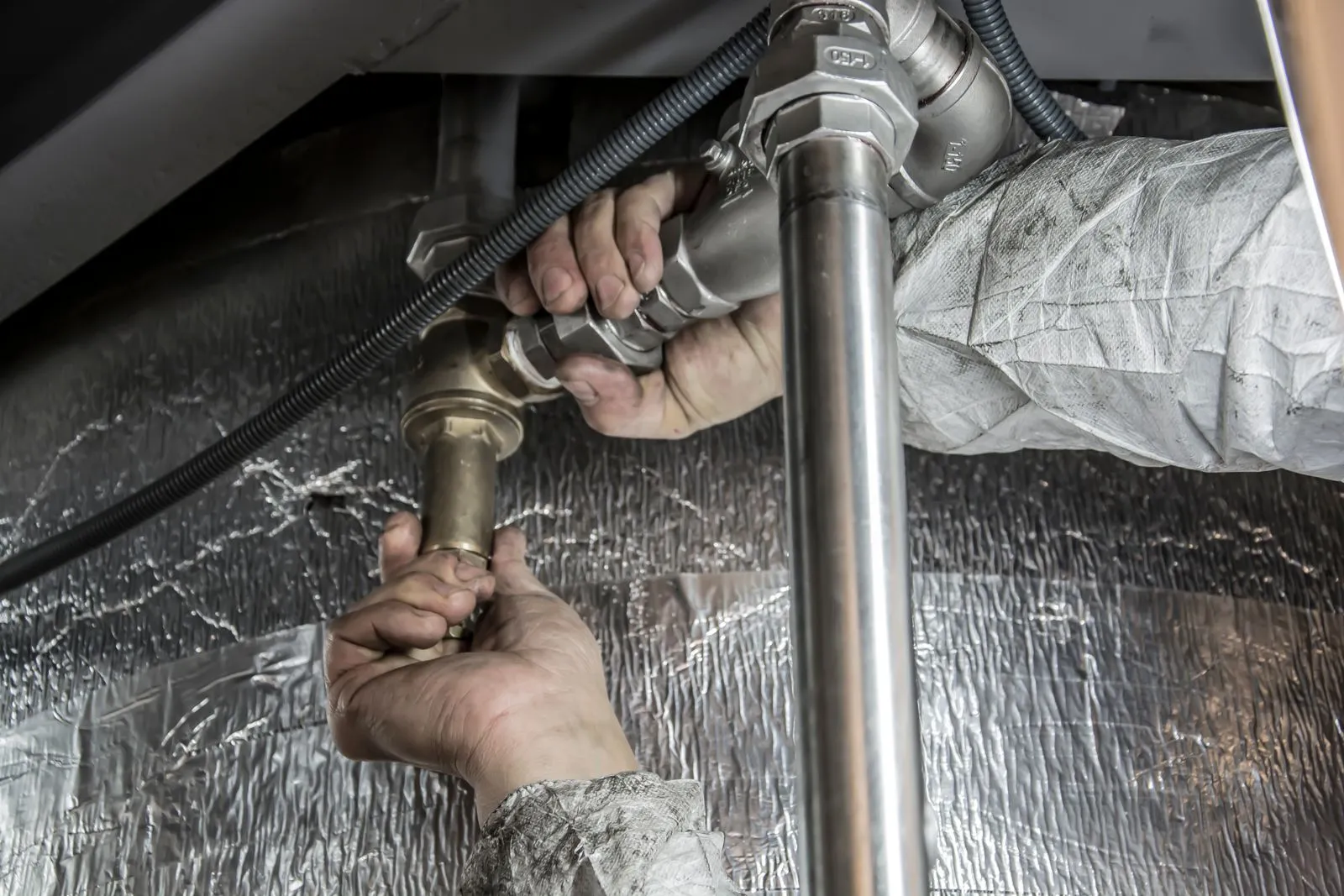
Insulated pipework runs from the outdoor unit to the cylinder and heating circuit. Bristol’s water is hard, coming from limestone, so expect a scale reducer on the incoming main if the installer recommended one, and a magnetic filter on the heating circuit.
You’ll have limited or no hot water for part of today and tomorrow.
Day 3: radiators
The radiators identified in the survey as too small are replaced with larger or double-panel models. In a typical Bishopston or Southville terrace, that’s three to five: the bay-fronted front room, the back bedroom over the kitchen, and any room with two outside walls.
Old radiator circuits in Bristol homes often contain decades of sludge and scale. The installer flushes the system before refilling it with inhibitor, which protects the new heat pump.
Day 4: electrics and controls
An electrician connects the outdoor unit on its own circuit, which may mean a new consumer unit if yours is old. The installer notifies National Grid Electricity Distribution, the network operator for the South West, before the heat pump is connected. A supply upgrade is rare for a single home.
The controller is fitted, usually a wall-mounted unit or app, and weather compensation is set up. This adjusts the water temperature to the weather outside and is key to efficiency.
Day 5: commissioning and handover
The system is filled, pressurised, bled and tested. The installer checks flow rates, sets the heating curve, runs the system through a heating and hot water cycle, and confirms it matches the design.
At handover you should get:
- a walk-through of the controls and what settings to leave alone
- the MCS certificate, which proves the installation qualifies for the grant and the warranty
- manufacturer warranty registration details
- the commissioning record and heat loss calculation
- advice on the first few weeks: leave it running steadily, don’t switch it on and off like a gas boiler
The installer then redeems the grant voucher and sends the final invoice with £7,500 deducted.
How long does it really take?
| Home | Typical days on site |
|---|---|
| Interwar semi with existing cylinder, few radiator changes | 2–3 |
| Victorian terrace, combi replacement, 3–5 radiators | 4–5 |
| Large Clifton or Cotham townhouse, many radiators | 5–7 |
Listed buildings can take longer because of extra care with historic fabric.
The first month
Heat pumps take a little getting used to. Radiators feel warm rather than hot, and the system runs for longer periods. Most installers recommend:
- leaving the heating on with a steady target temperature
- avoiding big overnight setbacks
- noting any cold rooms in the first few weeks so the installer can adjust the settings at a follow-up visit
Bristol’s mild winters mean most new owners find the first winter comfortable and the bills lower than feared. If a room is persistently cold, it’s usually a balancing or settings issue, which is quick to fix.
For costs, see heat pump prices in Bristol. For the paperwork, see applying for the grant.
See what a heat pump would look like in your Bristol home
The mechanism is the same in every UK home; the design is specific to yours. Our team carries out a free in-home survey including a full room-by-room heat-loss calculation, identifies the system size and configuration that fits your property, and provides a written quote with the £7,500 BUS grant already deducted.
You'll see the actual figure you'd pay — not an estimate — and the projected efficiency for your specific install.