Do Heat Pumps Work in Bristol Winters?
Last reviewed: 2 October 2026
Bristol's winters are mild and damp rather than bitterly cold, which suits heat pumps well. Here is how a heat pump behaves through a Bristol winter, what defrosting looks like, and how it copes with the occasional hard frost.
The short answer
Yes. Air source heat pumps keep working well below freezing, and they’re the main form of home heating in countries with far harsher winters than ours, including Norway and Sweden. Bristol’s climate is among the most favourable in England for them.
What a Bristol winter looks like to a heat pump
The Met Office station at Filton, on Bristol’s northern edge, gives a good picture of local conditions over 1991–2020:
- January average overnight low: about 2.4°C
- Air frost: around 33 days a year
- Rainfall: around 820 mm a year, much of it in winter
That’s mild for England. Most winter days in Bristol are between about 3°C and 10°C, which is comfortably within the range where heat pumps work efficiently. Prolonged hard frosts are uncommon, though they do happen.
How efficiency changes with temperature
A heat pump moves heat from outside air into your home. The colder the air, the harder it works, so its efficiency (the heat delivered per unit of electricity) falls as temperatures drop.
| Outside temperature | Typical efficiency (heat out ÷ electricity in) |
|---|---|
| 10°C | 4.0–5.0 |
| 5°C | 3.3–4.0 |
| 0°C | 2.8–3.3 |
| −5°C | 2.3–2.8 |
Even at −5°C, a heat pump delivers more than twice as much heat as the electricity it uses. Because Bristol spends so little of its winter below freezing, the seasonal average for a well-designed system here is typically 3.2–3.8.
Defrosting: why damp matters more than cold
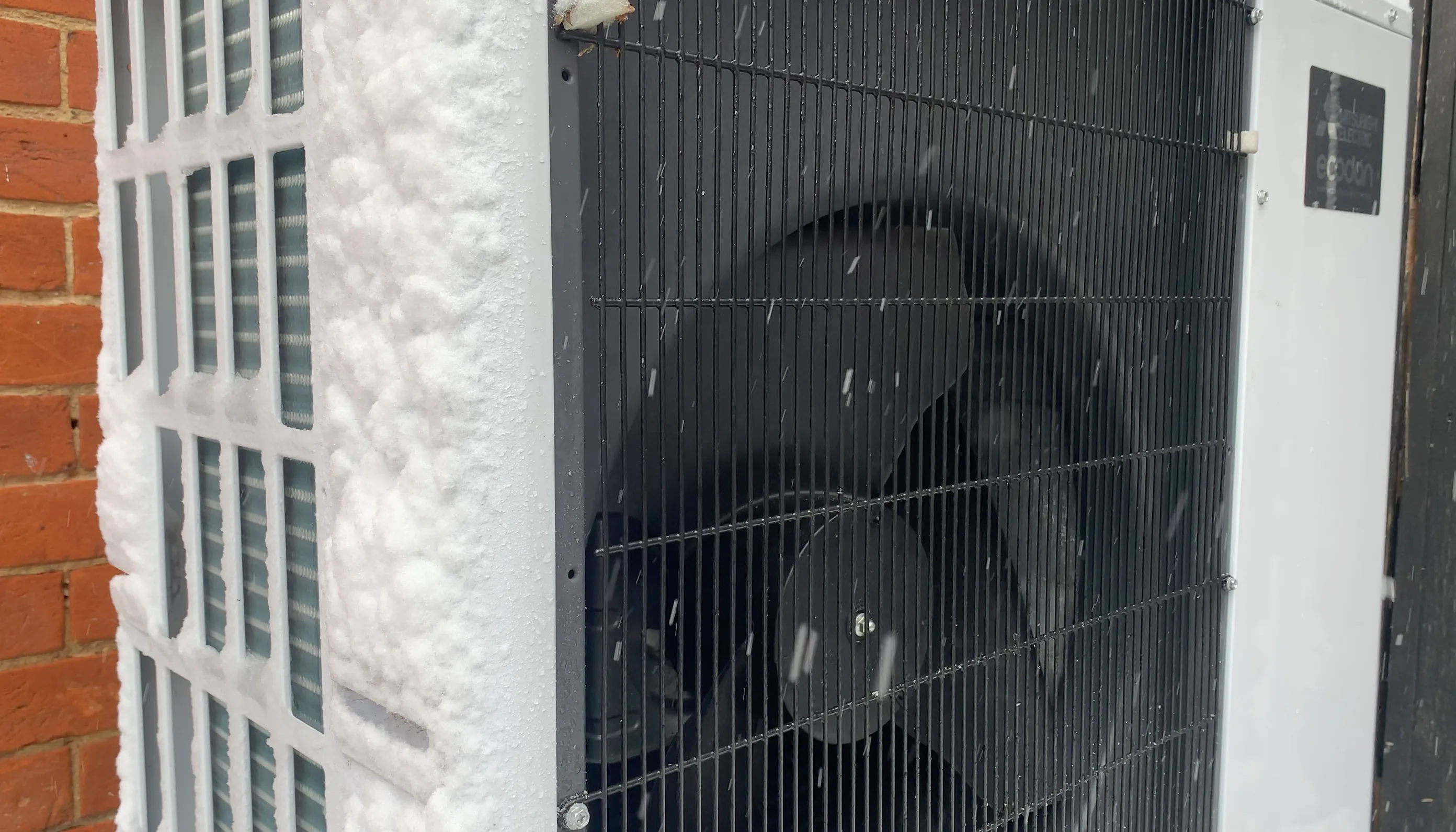
Bristol’s winters are damp. On mornings when the air is just above or around freezing and humid, moisture freezes onto the outdoor unit’s coil. The heat pump then runs a defrost cycle: it briefly reverses, warming the coil to melt the ice. You may see a cloud of steam and water dripping from the unit.
This is normal and takes a few minutes. Your radiators stay warm because the house holds its heat and the system is designed for it. Good siting matters: the meltwater needs somewhere to drain, ideally onto gravel or a soakaway, not a path that will freeze.
What about a cold snap?
Every few years Bristol gets a spell of hard frost or snow. A correctly sized heat pump is designed for this. The installer calculates heat loss for a cold design day set by MCS for your location, so the heat pump can keep the house at temperature in those conditions without relying on a backup heater.
What helps in a cold snap:
- Leave it running. Don’t turn the heating off overnight and expect it to recover fast in the morning.
- Keep the outdoor unit clear of snow drifts and leaves.
- Trust the weather compensation. The controller raises the water temperature automatically as it gets colder.
Older homes and cold weather
Bristol’s solid-walled stone and brick homes lose heat faster in cold weather than modern houses. That’s handled at the design stage: correctly sized radiators and an accurate heat loss calculation. Cheap improvements like draught-proofing sash windows and floorboards make the house hold its heat better on the coldest nights. See heat pumps in Victorian and Georgian homes.
Myths
“Heat pumps stop working below freezing.” No. Modern units work down to −15°C or lower.
“You’ll need a backup boiler.” Not if the system is sized correctly. The Boiler Upgrade Scheme doesn’t fund hybrid systems that keep a gas boiler.
“Radiators will feel cold.” They’ll feel warm rather than hot, because the water runs at a lower temperature for longer. The room temperature is what matters.
Why the mild climate matters for your bills
The milder the winter, the more time a heat pump spends at high efficiency. That’s one reason Bristol homes tend to see good running costs compared with colder parts of the country. Our running cost guide puts numbers on it, and what size heat pump you need explains how the design day sets the size.
See what a heat pump would look like in your Bristol home
The mechanism is the same in every UK home; the design is specific to yours. Our team carries out a free in-home survey including a full room-by-room heat-loss calculation, identifies the system size and configuration that fits your property, and provides a written quote with the £7,500 BUS grant already deducted.
You'll see the actual figure you'd pay — not an estimate — and the projected efficiency for your specific install.